
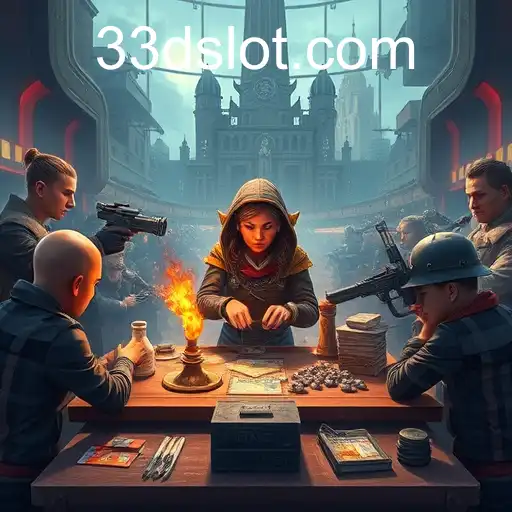
33D | The Evolution and Impact of Tabletop Games
33D’s Explore the evolution of tabletop games and the impact of innovative concepts like 33D, which redefine gaming experiences, enhancing social interaction, strategy, and creativity in modern board and role-playing games.
The Evolution and Impact of Tabletop Games
Tabletop games have experienced a remarkable transformation over the decades, evolving from simple board games to complex narratives involving strategy, creativity, and social interaction. In recent years, the advent of innovative technologies and concepts, such as "33D," has further propelled their popularity, capturing the interest of new generations while redefining gaming experiences.
Understanding Tabletop Games
Tabletop games encompass a wide range of genres, including board games, card games, role-playing games (RPGs), and miniature wargames. They typically involve players facing each other across a table, engaging in strategic thought, planning, and negotiation. Unlike digital games, they require face-to-face interaction, fostering communication and community.
The Role of 33D in Tabletop Gaming
The concept of "33D" in tabletop gaming is intriguing, adding an additional dimension of complexity and depth. Although not a formally recognized term in the gaming lexicon, it can be understood as a metaphorical reference to the integration of new dimensions in gaming experiences, like three-dimensional thought or expanded game designs. 33D emphasizes the profound strategic and creative liberties players have, allowing them to craft stories and experiences beyond traditional constraints.
A Shift to Modernity
The incorporation of features akin to 33D in gaming has seen an explosion of creativity and innovation in recent decades. Designers are moving beyond the classic mechanics, introducing elements that extend the capabilities of a game - from integrating augmented reality to offering more complex narratives. This shift not only enhances gameplay but also extends the appeal of tabletop games to broader audiences. The immersive nature of these games encourages players to dive deeply into the universe created by the game, often blurring the lines between the game world and reality.
Innovation in Design
Tabletop games are seeing a surge in new designs that challenge traditional ideas and mechanics. Designers are creating 33D-like experiences where players are required to think ahead more dynamically and use multidimensional strategies to outwit opponents. This could involve manipulating game elements in innovative ways or interpreting the rules creatively under the guise of game masters in RPGs.
Social Interaction and Collaboration
At the heart of tabletop games, regardless of complexity, is the strong emphasis on social interaction. These games are quintessentially collaborative or competitive, creating environments that necessitate communication, persuasion, and teamwork. The introduction of 33D concepts encourages players to form alliances, create strategies collectively, and engage in competitive banter that enriches the gaming experience.
Nostalgia and New Media
Many enthusiasts of tabletop games are drawn to them due to a sense of nostalgia for simpler times and the rich storytelling offered by board and role-playing games. However, the modern twist added by 33D elements makes these games appealing to younger audiences as well. Used alongside streaming platforms and social media, new media offer a way to showcase these games to wider audiences, with many content creators gaining popularity by creating engaging gameplays and reviews.
Role of Augmented Reality
Augmented reality has started to play a more significant role in incorporating 33D concepts into tabletop games. Through smartphone apps and bespoke AR equipment, players can overlay digital visualization onto physical game elements, creating a blend that enriches the overall experience. This fusion of digital and tactile experiences attracts tech-savvy players who desire deeper immersion.
Exploring New Frontiers
The development of concepts like 33D in tabletop games signifies the continual evolution of this niche, showcasing endless possibilities. As technology advances and new ideas emerge, the realm of tabletop gaming is likely to expand further, inviting players to explore new frontiers of imagination and strategy. These innovations promise to redefine what players find exciting and challenging, making the future of tabletop gaming rich with potential.
The enduring appeal of tabletop games lies in their ability to adapt and evolve, reflecting cultural shifts and technological advancements. As their universe continues to expand, the persistent fusion of classical gaming qualities with modern innovations promises to attract and captivate future generations.
